

Many of us have witnessed it haven’t we? A car pulls into a disability parking space and out gets the driver, with no blue disability parking badge on display, hurrying away before anyone challenges them. Or if someone does remind them that this is a space for disabled drivers only, they are met with a torrent of abuse. So why do people do it? Why do people who don’t have a blue badge demonstrate such bad behaviour by parking in a disability parking bay?
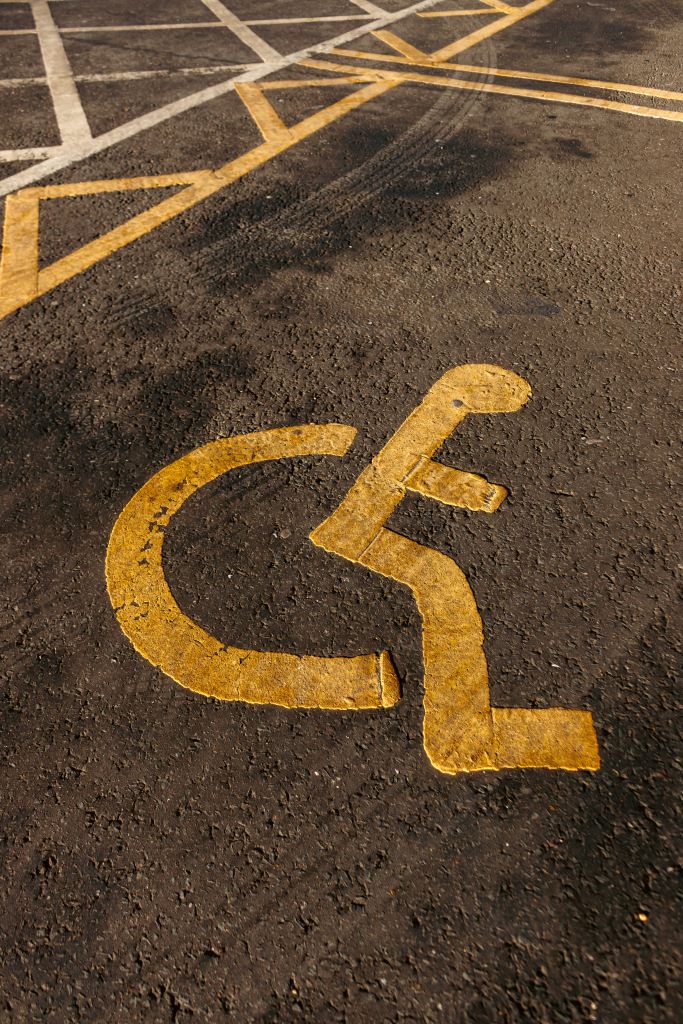
Over the years I’ve seen this happen many times, and have often heard the justifications given; I’ve also heard disabled people sharing their own stories on this too, and the reasons given are many, but here are a few…
“I’ll only be five minutes… ” or “I’m in a hurry…”
This is a popular response, and it is essentially doubling down on the selfishness shown in parking in a disability parking bay in the first place. Essentially it is saying that not only is the person more important than a disabled driver who now can’t park in the disability parking bay, but that the persons needs are greater too. Their five minutes are more significant than those of a disabled person.
“The normal spaces are too small for my car…” or “My car might get damaged…”
While it is true that cars have significantly increased in size, with parking spaces sometimes not keeping up, it is still no excuse for someone to park their oversized vehicle in a disability parking space because they struggle to park it elsewhere or are worried that their car might get damaged. Their choice of car and lack of parking ability does not trump someone else’s disability.
“I forgot to bring my blue badge…”
When you hear this one you know it is a serial offender, someone who has found a neat excuse that they can use time and time again. If a disabled person is going to drive somewhere, they will know how difficult it is going to be for them if they have to park at the other end of the car park and risk being unable to get back in their car due to someone parking next to them, and so will make sure they have their blue badge with them.
“Everyone does it…”
At least it’s an honest answer, but the belief that it is normal behaviour for a non-disabled person to park in a disability parking space, preventing a disabled person easier access to a building or shop, is a sad inditement on society. Just because someone else is selfish, it doesn’t permission everyone else to be selfish too.
“There are loads of free disabled spaces…”
You might have heard this one too… Aside from the poor grammar, in that a space cannot be ‘disabled’, it suggests that it’s OK to limit the parking of a disabled person if there are other spaces available. But how many is enough? What if there are two disability parking bays free? Or only one? It’s simple really, it is never acceptable to use a disability parking space unless you are a disabled driver or a driver transporting a disabled person with a blue badge.
And a special mention needs to go to the worst response of them all, truly horrifying…
“Well, they shouldn’t be on the road anyway…”
It’s hard to know where to begin with this one… Let’s start by this comment lumping together and ‘othering’ an entire people group; one that represents approximately 18% of the population (over 10 million people in England and Wales, for example). Then the belief that disabled people are not permitted the freedom to travel taken as a right by everyone else. Even worse, this could be born out of a conviction that disabled people should be kept out of sight, shut away. Attitudes such as these are bordering on eugenics and have no place in society.
I’m sure there are many more excuses that people have used to defend the indefensible act of parking in a disability parking space. We’ve been on both sides of this issue, as our son James has a blue badge. When we’ve been parking up in a disability parking bay, we’ve seen people looking at us suspiciously until we’ve displayed James blue badge. Even that hasn’t met with everyone’s approval, with comments such as “Well, he doesn’t look disabled!” as if we’re making it all up to get a better parking space!
If you are a disabled person, or carer to a disabled person, reading this and have other stories to tell, do add them to the comments and I’ll try and include some of them in this blog post. If you’ve parked in a disability parking space and didn’t have the right to, please remember this blog post next time and find another space to park in, thank you.
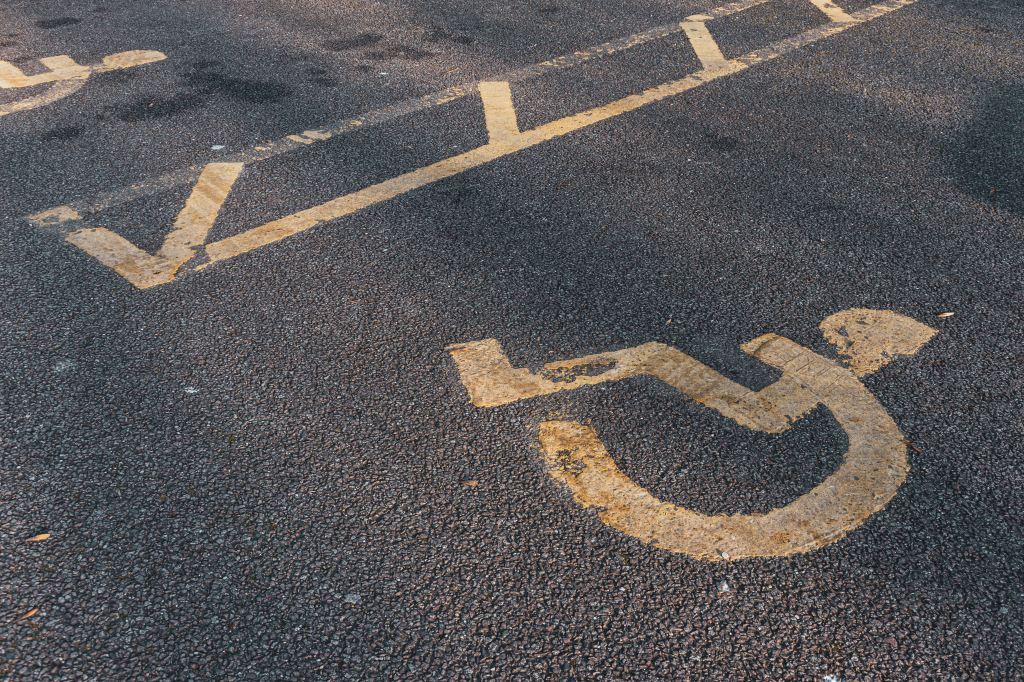
It would help if disability parking spaces were effectively monitored, either in-person or via CCTV, so that offenders were pulled up on their selfish bad behaviour. But until that happens, let’s try and encourage people to think again before wrongly using a disability parking space.
Thank you,
Mark
See also:
All text © Mark Arnold / The Additional Needs Blogfather. Images by Jakub Pabis on Unsplash.

 The Additional Needs Blogfather
I live in Canada and read your blog post in Evangelical Focus. As a new wheelchair user, your topic is interesting. I haven’t yet applied for a “blue badge” yet because my chair is electric so distance doesn’t pose a hardship for me yet. But come winter, it will be more important because my chair won’t handle going through the snow we get in Winnipeg and hopefully, more care is taken in snow removal between handicapped parking and the doors to the building I want to enter.
The thing about “the blue badge”, at least here, is that it’s displayed to be seen through the windshield which, in a parking lot, is not easily seen by others. I once, years ago, challenged someone who parked in a handicap spot because he didn’t look handicapped. He had an answer but did he tell the truth? I couldn’t be bothered to go look at his windshield.
A friend who has no walking ability at all once complained to me about non-handicapped drivers with handicapped passengers parking in handicapped spots which, at the time, I thought was valid. They could drop their passenger at the entrance and then park somewhere further away. But then I was faced with this dilemma when taking my mom, who has dementia, places. I couldn’t just drop her off at the door and park elsewhere because she might wander off in the meantime or panic about where she was with no one with her.
The whole issue of handicapped parking is complicated.
LikeLiked by 1 person