
There are many accounts in both the Old and New Testament of the Bible that reference disabled people, but was one of the best-known people in the New Testament, the Apostle Paul, one of their number? Was Paul disabled, at least for some of his life? And if so, what can we learn from his story?
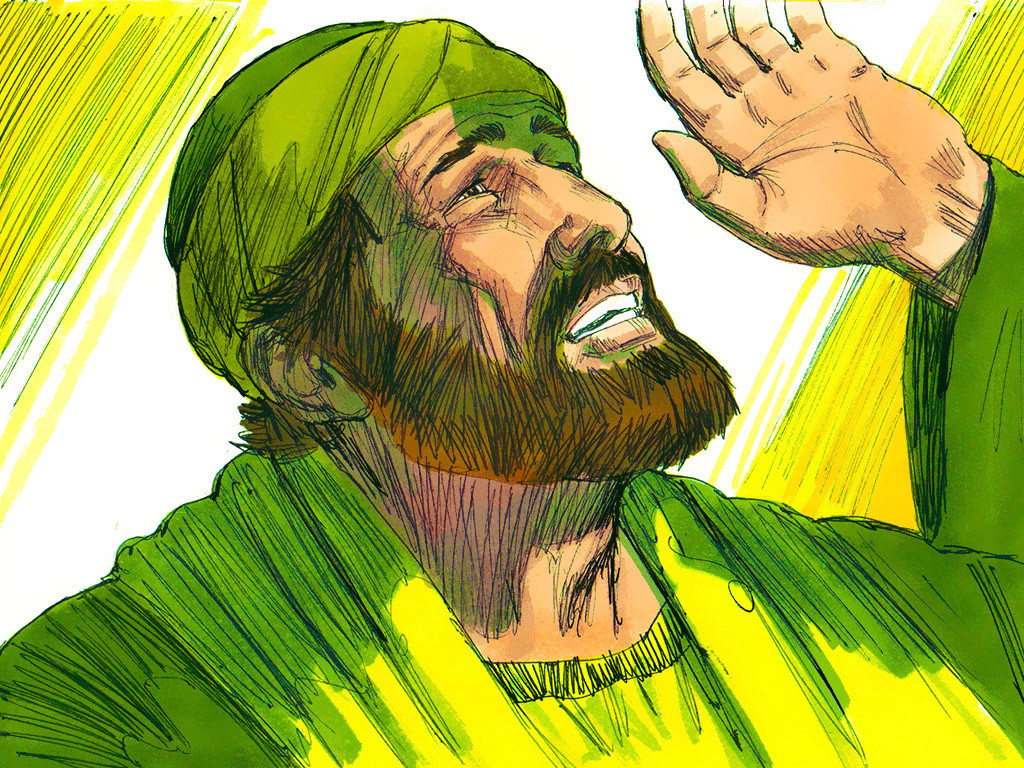
We start with the transformative moment that Paul (then called Saul) encounters Jesus on the road to Damascus, as recorded in Acts 9. His encounter came from a place of opposition; he was on his was there to find Christian believers and make them prisoners. We pick the story up in Acts Ch9 v3 (New International Readers Version)…
‘3 On his journey, Saul approached Damascus. Suddenly a light from heaven flashed around him. 4 He fell to the ground. He heard a voice speak to him, “Saul! Saul! Why are you opposing me?”
5 “Who are you, Lord?” Saul asked.
“I am Jesus,” he replied. “I am the one you are opposing. 6 Now get up and go into the city. There you will be told what you must do.”
7 The men traveling with Saul stood there. They weren’t able to speak. They had heard the sound. But they didn’t see anyone. 8 Saul got up from the ground. He opened his eyes, but he couldn’t see. So they led him by the hand into Damascus. 9 For three days he was blind. He didn’t eat or drink anything.
10 In Damascus there was a believer named Ananias. The Lord called out to him in a vision. “Ananias!” he said.
“Yes, Lord,” he answered.
11 The Lord told him, “Go to the house of Judas on Straight Street. Ask for a man from Tarsus named Saul. He is praying. 12 In a vision Saul has seen a man come and place his hands on him. That man’s name is Ananias. In the vision, Ananias placed his hands on Saul so he could see again.”
13 “Lord,” Ananias answered, “I’ve heard many reports about this man. They say he has done great harm to your holy people in Jerusalem. 14 Now he has come here to arrest all those who worship you. The chief priests have given him authority to do this.”
15 But the Lord said to Ananias, “Go! I have chosen this man to work for me. He will announce my name to the Gentiles and to their kings. He will also announce my name to the people of Israel. 16 I will show him how much he must suffer for me.”
17 Then Ananias went to the house and entered it. He placed his hands on Saul. “Brother Saul,” he said, “you saw the Lord Jesus. He appeared to you on the road as you were coming here. He has sent me so that you will be able to see again. You will be filled with the Holy Spirit.” 18 Right away something like scales fell from Saul’s eyes. And he could see again. He got up and was baptized. 19 After eating some food, he got his strength back.’
We can see, then, that Paul (Saul) was indeed blinded by his encounter with Jesus, and that he remained so for three days until Ananias, obeying the Lord, came to Paul and by the power of the Holy Spirit he restored Paul’s sight.
Q. Have you ever experienced a temporary loss of one of your senses? Maybe due to an illness, accident, or operation? How did it make you feel? Even if you knew your sense would return after a short period, did it worry you? Was it strange to not have the use of a sense that you so rely on usually?
Paul didn’t know that Ananias was going to be sent to restore his sight. He must have wondered if he would be permanently blind. Today, over 50 people in the UK will be registered as blind or partially sighted, joining the over two million people currently living with sight loss in the UK.
Paul’s sight was restored, but he continued to struggle with his vision, as he himself references in his writings. One example of this is that Paul used a scribe, or ‘amanuensis’ to write the epistles or letters that he sent to various churches etc. In Romans (16:22 NIrV) the scribe is name checked and adds his own greeting… “22 I, Tertius, wrote down this letter. I greet you as a believer in the Lord.”
In the letter to the Galatians, Paul again shows us that he is struggling with his vision when comparing the care the Galatians had shown him previously to the relative lack of care he feels from them now… (Galatians 4:13-15 NIrV)…
“13 Remember when I first preached the good news to you? Remember I did that because I was sick. 14 And my sickness was hard on you. But you weren’t mean to me. You didn’t make fun of me. Instead, you welcomed me as if I were an angel of God. You welcomed me as if I were Christ Jesus himself. 15 So why aren’t you treating me the same way now? Suppose you could have torn out your own eyes and given them to me. Then you would have done it. I am a witness to this.”
Later in Galatians, as Paul himself writes his concluding remarks, he references the impact of his sight issues (Galatians 6:11 NIrV)…
“11 Look at the big letters I’m using as I write to you with my own hand!”
In his second letter to the Corinthians, Paul references the ongoing health problem he has, in some translations referred to as a “thorn in his flesh” (2 Corinthians 12:7-9a NIrV)…
“7 God has shown me amazing and wonderful things. People should not think more of me because of it. So I wouldn’t become proud of myself, I was given a problem. This problem caused pain in my body. It is a messenger from Satan to make me suffer. 8 Three times I begged the Lord to take it away from me. 9 But he said to me, “My grace is all you need. My power is strongest when you are weak.”…”
Some have considered whether Paul is referring here to his struggles with his vision, although this is not explicitly mentioned.
Q. If you struggle with the loss or impairment of one of your senses, how does Paul’s story affect you? Have you, like Paul, asked for God to take it away? Maybe like Paul you have asked several times? What do you think God meant when he replied to Paul “My grace is all you need. My power is strongest when you are weak.”?
Sight loss or visual impairment can be experienced by people of any age. There are more than 25,000 children in the UK who are blind or have a visual impairment, for example.
Organisations such as Torch Trust (https://www.torchtrust.org) exist to support people of any age that experience sight loss or visual impairment. As a Christian organisation, Torch Trust exists to enable blind and partially sighted people to encounter Jesus, grow in their Christian faith and thrive in Christian community. They offer a wide range of support and resources for individuals and churches.
Q. Do you know someone, whether a child/young person or adult, who is blind or partially sighted? How could you help them to “…encounter Jesus, grow in their Christian faith and thrive in Christian community.”?
There are many things, often quite simple and easy to put in place, that can make a huge difference for children, young people, or adults, who are blind or partially sighted. Here’s Philippa, a young adult who was born blind, sharing some of her story…
Q. What stood out for you from Philippa’s story? What could you do to make a difference for people in your church community who are blind or partially sighted?
I hope this article has given you food for thought, helped you to think about who in your church community is journeying with sight loss or a visual impairment, and given you some ideas about how to assist and support them.
There is much we can all do to help everyone to be included in everything that is going on, and to truly belong. What will you do today?
Shalom,
Mark
See also:
People Jesus Healed: – A Video And Study Plan: Study 2 – Bartimaeus, A Man Born Blind
https://theadditionalneedsblogfather.com/2020/03/31/pjh2/
All content © Mark Arnold / The Additional Needs Blogfather, unless otherwise specified.
Bible passage taken from the New International Reader’s Version (NIRV) Copyright © 1995, 1996, 1998, 2014 by Biblica, Inc.®. Used by permission. All rights reserved worldwide.
Philippa’s video © Urban Saints https://www.urbansaints.org
All images © Free Bible Images (contributed by Sweet Publishing) and made available free of charge. Visit https://www.freebibleimages.org/illustrations/paul-conversion/ for details.

 The Additional Needs Blogfather