
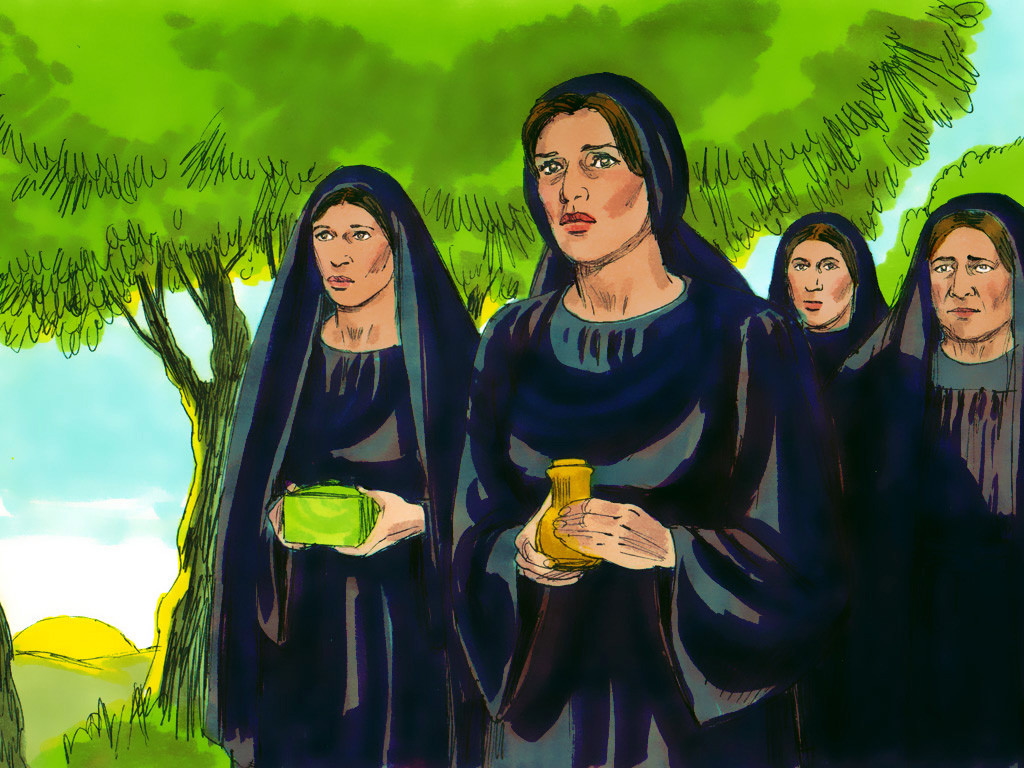
A quick look through the encounters that Jesus had with disabled or sick people shows us that a large majority of them were male. The focus when looking at Jesus’ healing miracles is often on the man lowered through the roof, or Bartimaeus, or one of the men with leprosy that came to Jesus to be healed, but there were some women and girls that Jesus healed too. This blog acknowledges them, and their stories, as we learn together through their encounters with Jesus.
We meet them in broadly chronological order:
- Peter’s mother-in-law: Jesus cured her of a high fever by touching her hand, after which she got up and served them (Matthew 8:14–15, Mark 1:30–31, Luke 4:38–39).
In that time, a high fever was a feared, life-threatening, condition often associated with severe illness or dark spiritual forces. Jesus entered her home to meet her urgent medical need, showing understanding and compassion.
Once healed, she immediately got up and began to serve (or wait on) Jesus and the disciples. This prompt service is often used as an example of the ideal response to receiving God’s grace and healing; gratitude expressed through action. - Mary Magdalene: Luke tells us that Jesus cast seven demons out of Mary Magdelene, and she became a devoted follower and financial supporter of his ministry (Luke 8:2–3).
In that time, the number seven was significant, representing completeness or fulness. The seven ‘demons’ may have represented that Mary was completely overwhelmed by physical, psychological, or spiritual issues. Her release from these by Jesus resulted in her staunch loyalty to him in practical and financial ways.
She went on to witness Jesus’ crucifixion, and was the first witness to his resurrection, holding a highly important position in the Gospel story.
- Joanna (wife of Chuza): Cured of evil spirits or infirmities (see Mary Magdalene, above), she travelled with Jesus and supported His work (Luke 8:2–3).
Joanna was married to Chuza, who was the Steward of Herod Antipas, the ruler of Galilee. She held a position of importance, which she put aside to follow Jesus. She supported Jesus and the disciples practically and financially during his ministry.
She is recorded as being one of the women that brought spices to embalm Jesus’ body after his crucifixion, and found the tomb empty. - Susanna: Healed of evil spirits or illnesses (again, see Mary Magdalene, above), she also travelled with, and provided for, Jesus and the disciples (Luke 8:2–3).
A similar story to Joanna (above), once healed by Jesus, Susanna followed him and supported his ministry. In this time, and within the Jewish culture, it was highly unusual for women to independently provide support, and even finances, for a rabbi.
The presence of Susanna, Joanna, Mary Magdalene, and other women whose names we are not told, gives evidence that Jesus valued women not merely as passive recipients of his healing, but as active, equal, partners and providers alongside his male disciples. - Jairus’s 12-year-old daughter: Jesus raised her back to life after she died (Matthew 9:18–26, Mark 5:22–42, Luke 8:43–48).
Jesus demonstrates his divine power over death, something he would do several times before the ultimate example of his own resurrection in the tomb.
Jesus also teaches us through this encounter that faith can conquer fear. He said to Jairus, a distraught father, “Do not be afraid, just believe.” Jairus did believe, and his daughter lived!
Read more of my thoughts about this miracle here: https://theadditionalneedsblogfather.com/2021/04/29/jairus-daughter/
- The woman with the issue of bleeding: She suffered from chronic bleeding for 12 years, went through all manner of ‘treatments’ and was healed instantly when she touched the edge of Jesus’s cloak (Matthew 9:20–22, Mark 5:25–29, Luke 8:43–48).
Under Jewish law, a condition that made someone continuously bleed rendered them ceremonially unclean. Anything, or anyone, that she touched also became unclean.
As she touched Jesus’ robe, Jesus reversed the ‘defilement’, and instead of becoming ‘unclean’ himself, his divine holiness healed her, rewarding her persistence and faith.
Jesus forced her to come forward and declare what she had done not out of cruelty, but to call her “Daughter”, restoring her dignity and changing her status from one of ‘outcast’ to being back at the heart of her family and community again.
Read more of my thoughts about this miracle here: https://theadditionalneedsblogfather.com/2020/04/09/pjh5/ - The bent-over woman (spirit of infirmity): Jesus healed a woman in the synagogue who had been ‘crippled by a spirit’ for 18 years, making her straight again (Luke 13:10–17).
For eighteen years, she was bent in half, unable to look upwards. She may have not been able to look up to Jesus, but he saw her, called her forward, and set her free from her infirmity.
What follows is an example of Jesus berating the Jewish leaders for lacking compassion and understanding, putting inflexible laws ahead of love.
There is also a metaphor here of the physical straightening of her body representing spiritual liberation; moving from being bowed down by the world to standing tall in faith as forgiven people, looking up to God.
Read more of my thoughts about this miracle here: https://theadditionalneedsblogfather.com/2025/10/17/jesus-heals-a-disabled-woman-on-the-sabbath-and-teaches-us-lessons-today/ - The daughter of the Syrophoenician woman: A young girl possessed by an unclean spirit whom Jesus healed from a distance after her mother showed great faith (Mark 7:24–30, Matthew 15:21–28).
This is a hugely significant story, as this mother changes the mind of God! It also, for the first time, shows us that salvation is available to anyone, not only the Jews.
Her response to Jesus initially refusing her plea for help for her daughter, highlighting that even the dogs eat the crumbs from under their master’s table, causes Jesus to heal her daughter and commend her great faith.
Read more of my thoughts about this miracle here: https://theadditionalneedsblogfather.com/2023/06/21/how-the-faith-of-a-canaanite-woman-inspires-us-not-to-give-up/ - Many unnamed women: The Gospels note that numerous other unnamed women were healed of evil spirits and diseases and travelled with Jesus (Luke 8:2, Luke 7:21).
Luke reveals to us that many other women were healed by Jesus and subsequently followed him. While they are not named and their stories are not detailed, this shows us that Jesus didn’t treat women as second class citizens, but as supporters, fellow travellers, and disciples. A lesson to many today!
Let us celebrate these women and girls, their stories, their transforming encounters with Jesus, and what all of this teaches us today.
Shalom,
Mark
All content © Mark Arnold / The Additional Needs Blogfather, except the header image © Sweet Publishing / FreeBibleimages.org


