
We see a lot written about men in the Bible who struggled with their mental health; Old Testament figures like Elijah, Job, David, and Jeremiah openly struggled with severe depression, burnout, or a desire to end their lives.
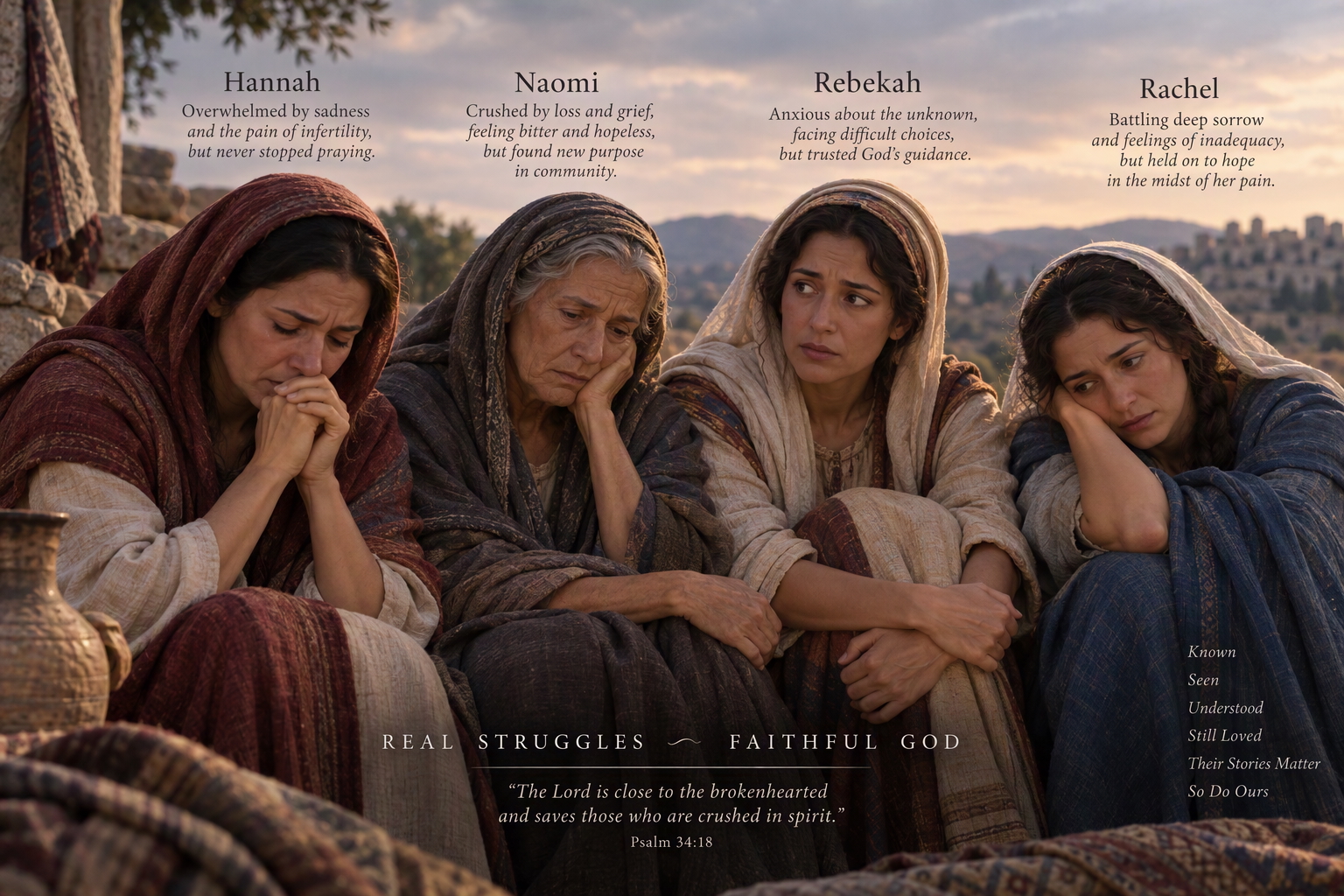
However, they were not alone. There is evidence of women in the Bible who had mental health struggles too. They are often, sadly, overlooked, and so in this blog we will be sharing some of their stories:
Hannah and Naomi are probably the most prominent women in the Bible whose stories reflect deep depression, grief, and emotional despair.
Hannah’s story (read 1 Samuel 1):
- The cause: Hannah suffered from severe emotional distress and became bitter because she was unable to have children; she was continually taunted and provoked by her husband’s other wife, Peninnah.
- Her experience: She was described as being “broken in spirit”, weeping bitterly, and even unable to eat due to her deep anguish.
- The resolution: She poured out her soul in prayer to God at the tabernacle, where the priest Eli initially mistook her for being drunk before blessing her. After praying, her face changed from being downcast, and she found peace.
Naomi’s story (read the Book of Ruth):
- The cause: Naomi faced profound loss and displacement after her husband and her two sons died while living in a foreign land (Moab), leaving her destitute and widowed.
- Her experience: When she returned to her hometown of Bethlehem empty-handed, she rejected her given name (which means “pleasant”) and asked people to call her Mara (which means “bitter”), stating that God had dealt very bitterly with her and brought her back empty.
- The resolution: Her turning point came through the devoted companionship and practical support of her Moabite daughter-in-law, Ruth, who stayed loyal to her and eventually provided a renewed future.
Other Biblical women who struggled with their mental health:
While the Bible does not use modern clinical terminology, several other women expressed deep despair or suicidal thoughts:
Rebekah (Genesis 27:46): Expressed being “disgusted with living” due to family conflict.
Rachel (Genesis 30:1): Cried out in despair over her inability to have children, saying she would die without them.
These four women lived a long time ago, but their stories have contemporary parallels with many women today. The stories of Hannah, Naomi, Rebekah, and Rachel remain deeply resonant today because they explore universal human experiences, social pressures, and psychological struggles that transcend time and culture.
Universal triggers of grief and trauma
- Bereavement and loss: Naomi’s devastation after losing her husband and two sons mirrors the modern experience of complicated grief, widowhood, and sudden life upheaval.
- Infertility and unmet longings: Hannah and Rachel’s anguish over being unable to conceive reflects the very real emotional toll, isolation, and grief that millions of women face today when dealing with infertility or unrealised life milestones.
- Displacement and financial insecurity: Naomi’s return to Bethlehem destitute echoes contemporary struggles with migration, loss of livelihood, and the fear of facing old age without a safety net.
Social comparison and stigma
- External pressure and bullying:Hannah was relentlessly provoked by Peninnah for not meeting the cultural expectations of motherhood. Today, women face similar feelings of inadequacy and depression driven by social comparison, family expectations, and social media.
- Isolation and misunderstanding: When Hannah prayed silently in deep distress, the priest Eli accused her of being drunk. This parallels the modern stigma surrounding mental health, where genuine emotional pain is often misjudged, dismissed, or misunderstood by outsiders and even community leaders.
Authentic depictions of mental health symptoms
- Physical and emotional manifestations: The biblical texts do not gloss over how despair affects the body. Hannah’s loss of appetite, uncontrollable weeping, and “broken spirit” align closely with modern clinical descriptions of major depressive episodes.
- Identity crisis: Naomi asking to be called Mara (“bitter”) instead of her real name illustrates how severe depression and trauma can fundamentally alter a person’s sense of self and identity.
Realistic paths toward healing
- Community and support:Naomi did not recover in isolation; her healing began through the steadfast loyalty, empathy, and practical care of Ruth. This mirrors modern psychological understanding that strong social support networks are vital for recovery from depression.
- Honest expression: Both Hannah and Naomi brought their raw anger, bitterness, and grief openly to God and their communities without pretending to be fine, modelling the importance of emotional honesty and vulnerability in the healing process.
Finding ourselves in the Bible can be a help, as we recognise that our struggles are not unique. Each of these Biblical women experienced God working in their lives. They were not forgotten, they were known, seen, understood, loved. Their stories matter; so do the stories of all women who struggle with their mental health.
Shalom,
Mark
See also:


